During the second interregional meeting in Mechelen, the second masterclass was given by Mervyn Jones and Joan Prummel, Senior and International Advisor on Circular Economy at of Rijkswaterstaat, respectively.
Their masterclass introduced the concept of behavioural changes, with Mervyn's experience using nudges to tackle littering at massive events as an example. The dichotomy of mindset change and behavioural change is a "chicken and egg" situation: whereas the former refers to fundamental shifts in beliefs and the latter refers to modifications in actions, each is an enabling force of the other.
There are many definitions of mindset change but a simple approach is recommended:
- Solve the right problem given the context - the size of your organisation defines the scale of your capacity.
- User journey and behavioural mapping - break behaviour into smaller decisions taken by various actors in order to identify bottlenecks and how to solve them.
- Solutions, testing what works, iteration - the process is dialectic. There is an expectation that pilots will be successful if they do exactly what was planned, but success is really about testing things and learning, then adapting solutions.
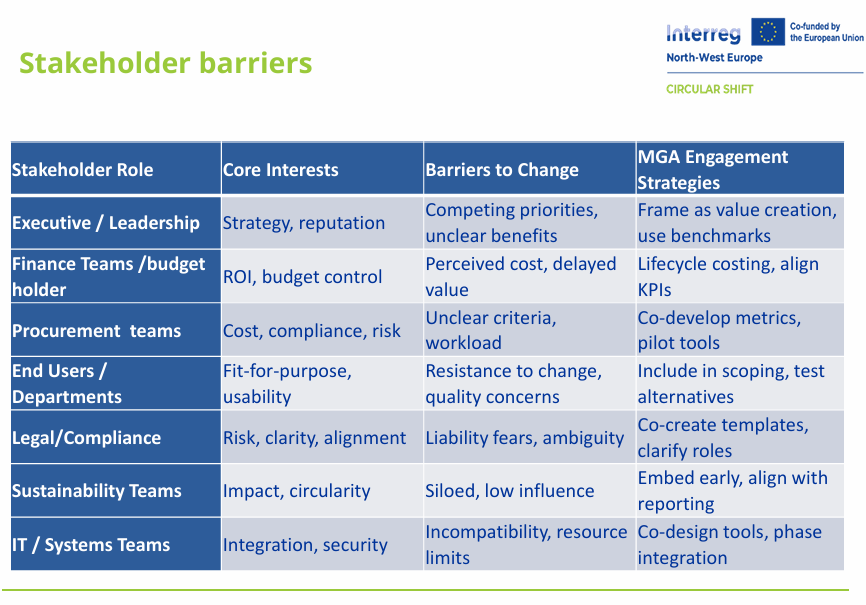
The barriers to circular procurement illustrated by Dr Cramer were referred to, as was her lesson that tailor-made approaches are needed.
Developing a situational analysis
The speakers then presented 7 steps to conduct a situational analysis:
- Build your team - recruit relevant stakeholders to complete the tasks.
- Assess your organisation's current situation - what are the regulatory framework, policy priorities, procurement procedures, internal and external factors?
- Build your situational analysis picture (who, what, when, where)
- Identify behaviours to be addressed.
- Identify positive behaviours - these can be easy to ignore but don't forget them! What works already, and how can it be better applied?
- Identify desired outcomes - the level of ambition will depend on the size and type of your organisation
- Identify target behaviours to change, considering also the target groups to affect behavioural change.
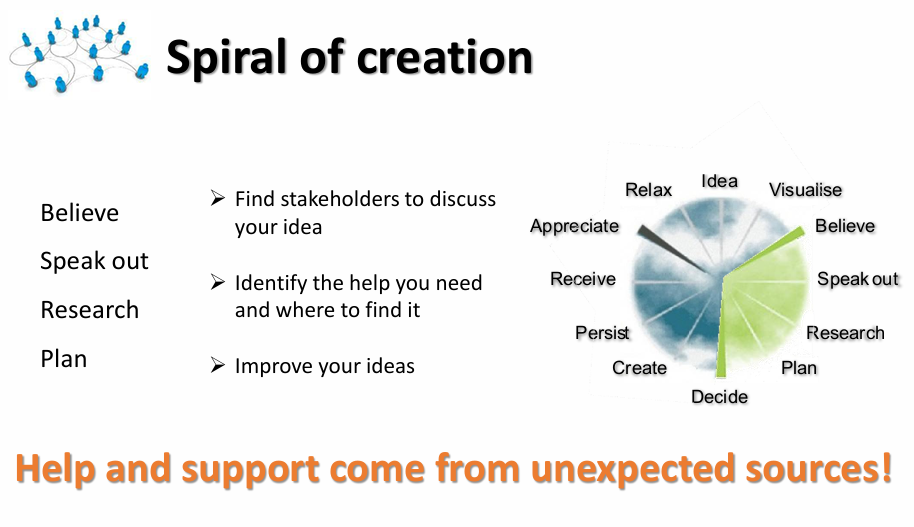
Stakeholder management: an example from the Netherlands
Next, Joan gave a personal example of stakeholder management, based on Rijkswaterstaat's renovation of their principal office in Den Haag back in 2018. The Green Deal Circular Buildings project to implement circularity in the renovation was the result of a five-step process: idea > share > people > roundtable > kick-off.
Ideation requires patience; ideas come from own knowledge, people, other ideas, problems, dreams... Sharing means discussing your idea with people whose opinion is relevant to you. People means finding the right people. Thought leaders and social networks can help you locate them. You may seek a broad range of potential stakeholders, looking for their roles and contributions: budget holders, experts, facilitators, pilots... Roundtable means involving potential stakeholders in a meeting, presenting a detailed draft of your idea. If it's successful, your meeting will end with an action plan. Finally, a kick-off is needed to go public with your idea. Make sure that all your participants feel proud of what you are trying to achieve!
In the case of the Green Deal Circular Buildings initiative, the result was not that they made every building in the Netherlands circular, but they did develop a circular buildings passport, develop pilots, and create a network of willing people. This was success. However, Joan said: "Backwards construction of the story shows a perfect picture, but it never was. It required six months of hard work, failure, ideation, and perseverance."
Systemic approaches
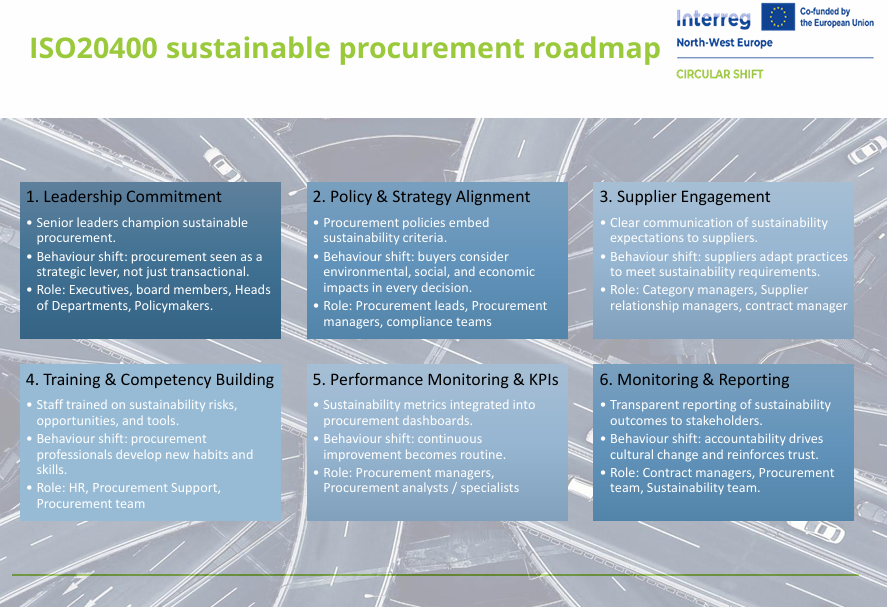
A systemic approach to changing procurement mindset and behaviour entails four key stages:
- Awareness - Leadership commitment sparks recognition of the importance of sustainability.
- Adoption - Policies and supplier engagement embed sustainability into procurement practice.
- Capability - Training builds skills and confidence.
- Reinforcement- KPIs, monitoring, and reporting ensure behaviours stick and evolve.
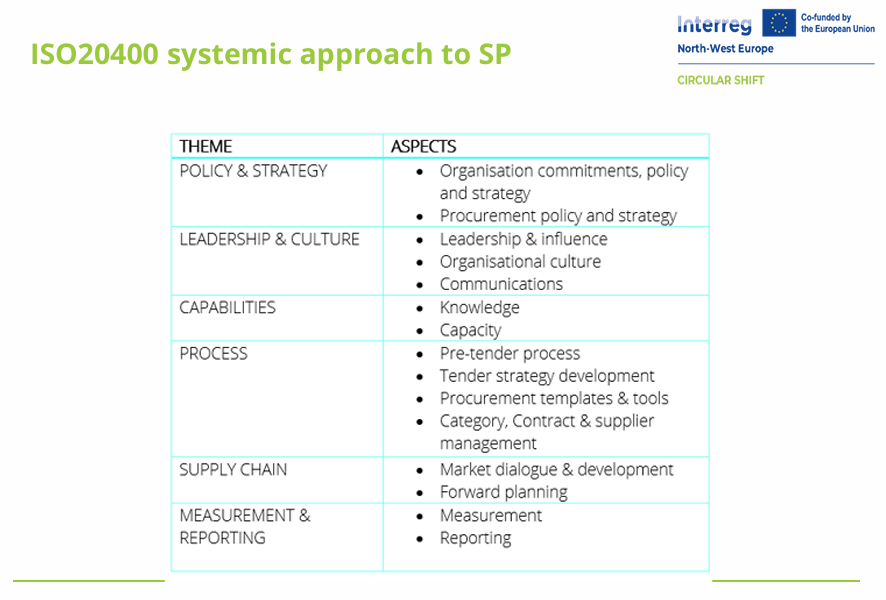
The ISO20400 systemic approach to sustainable procurement also recognises aspects forming the core of Circular Shift's approach, including: policy & strategy and leadership & culture; capabilities, process and supply chain; monitoring & reporting. The speakers also stressed that although monitoring is often relegated to the end of the list, it is really important to consider from the beginning of the process.
Five common barriers to change
- Ensuring change delivers tangible and sustainable impact - one of the most common pitfalls is how to translate strategic ambitions into measurable outcomes. Many organisations launch change programmes with bold ambitions but lack the mechanisms to track progress and sustain impact.
- Aligning leadership and building organizational buy-in - Change needs more than top-down directives. It needs active engagement throughout the organisation, e.g. by fostering a culture of co-creation.
- Bridging the talent and capability gap - the need to upskill employees can be compounded by a talent gap.
- Overcoming the "pilot trap" to scale change efforts - Many entities excel at piloting new initiatives but fail to scale them. The “pilot trap” often stems from a lack of dedicated resources, unclear ownership, or insufficient focus on scaling capabilities.
- Navigating external disruptions and industry-specific challenges - The external environment can increase the complexity of delivering change, e.g. regulatory uncertainty, economic volatility, supply chain shifts, or political changes. How much information do you need to make an effective decision? Can you harness volatility and disruptions to your advantage?
Identifying the right mindset
Is a general change in organisational perspective required (e.g. promoting general awareness of sustainability/circularity and the stakeholder’s role in delivering policy goals)? Or is the mindset change better focused on specific issues. These are not mutually exclusive but mutually reinforcing.
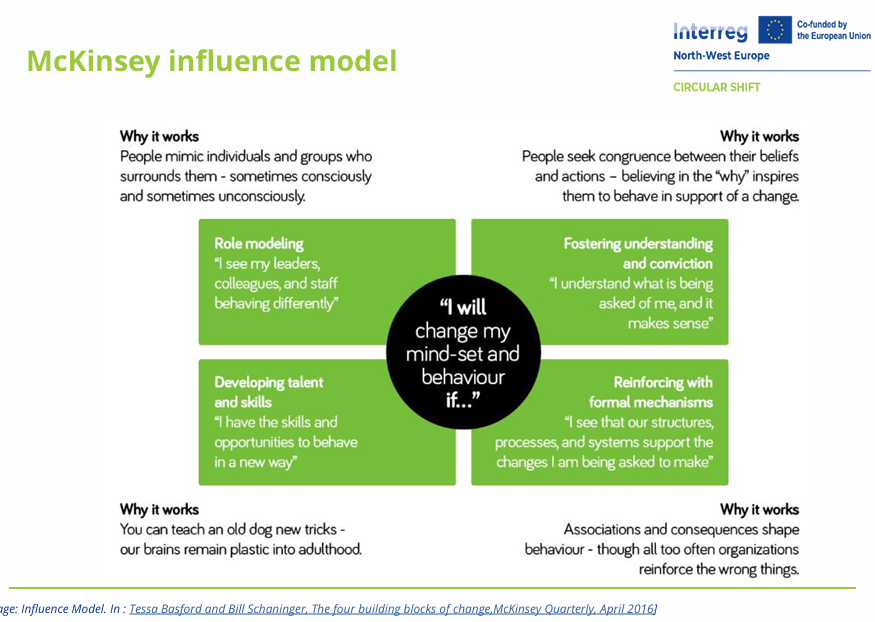
Success factors
- Communication - For a process of change to be understood, accepted and implemented, it must be clearly communicated.
- Collaboration - The right measures must be taken to successfully change behaviour. Focusing on collaboration and the purpose of the change is recommended
- Capacity - Successful change requires the development of talents and extensions of skills. Staff must be supported and encouraged in this development so that they actively accept and own the change(s).
- Champions - Role models help to implement change. Look for people and opportunities that will help you drive the process of change.