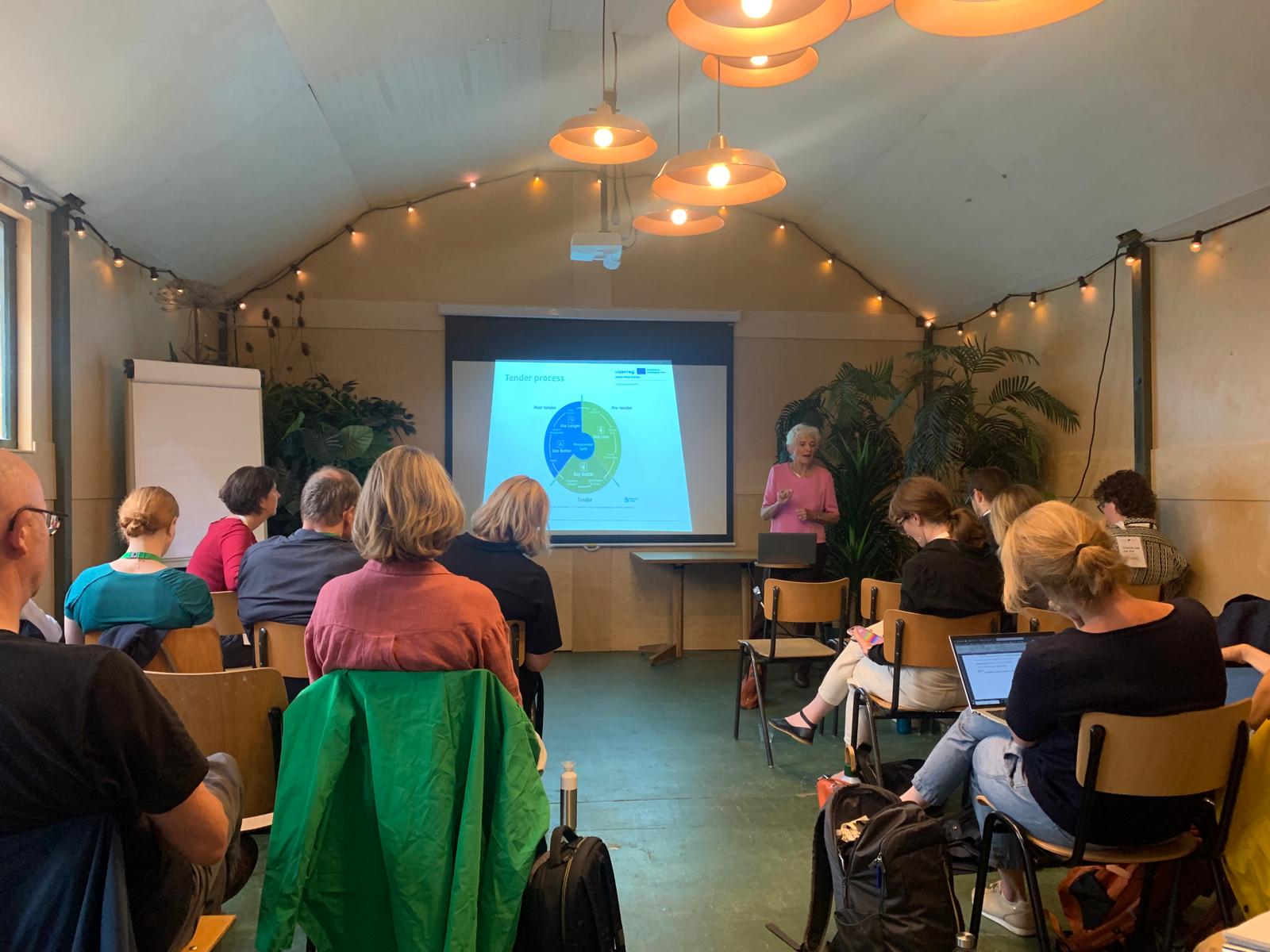
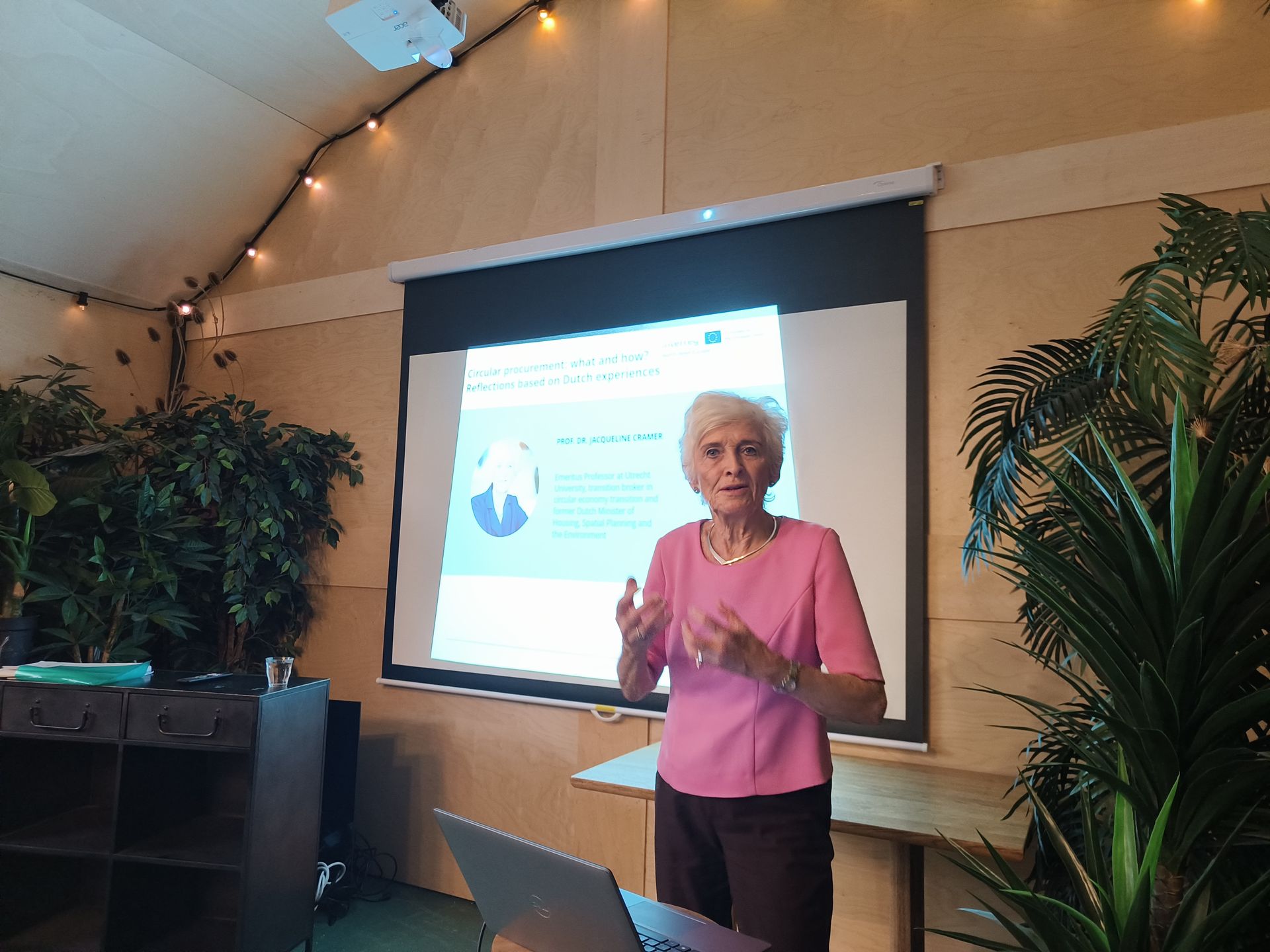
On 26 June in Utrecht, Circular Shift welcomed Dr Jacqueline Cramer, Emeritus Professor at Utrecht University, transition broker in circular economy transition, and former Dutch Minister of Housing, Spatial Planning and the Environment.
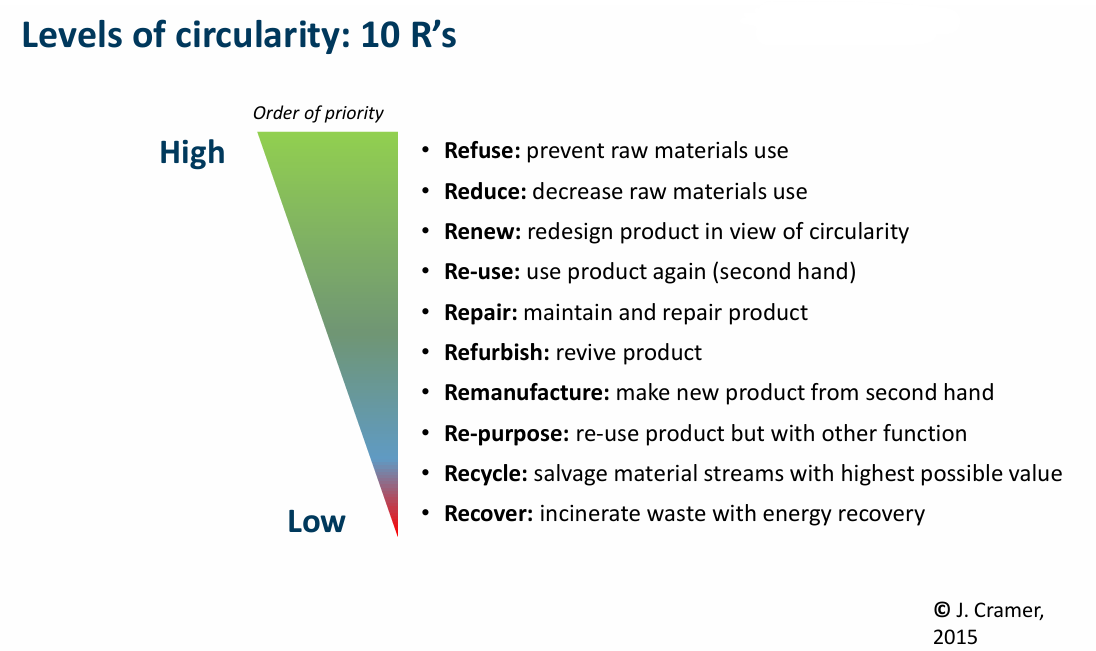
Dr Cramer's masterclass highlighted the urgent context of overconsumption that first motivated the shift toward circularity. She explained the difference between various circular strategies, which Dr Cramer was the first person to introduce as the 10 R's.
The masterclass also detailed the journey of the Netherlands as a frontrunner in the circular economy. What began as a response to the country's reliance on landfilling led to recycling and then ecodesign. Dr Cramer then explained how public procurement started to be seen as a principal strategy to stimulate the circular economy.
According to Dr Cramer, circular procurement is “the process in which a product, a service or a project is purchased according to the principles of a circular economy. In this process the technical aspects of the product are as circular as possible, taking maintenance and return policies at the end of the use period into account, as well as including financial incentives to guarantee circular use." Circular procurement differs from green procurement and sustainable procurement in that it retains a collaborative quality requiring value chain collaboration.
The masterclass covered four focus areas for circular procurement, including:
1. Adding circular criteria for products and services, such as recyclability, reuse of materials, and use of recycled materials.
2. Procurement of services and new business concepts.
3. Procurement of new and innovative products and services, and materials promoting circular businesses.
4. Procurement promoting industrial symbiosis and circular ecosystems - which requires significant investments, as well as cooperation and commitments from various stakeholders.
There are also three levels of execution for circular procurement, Dr Cramer shared: micro-level, focusing on the procurer's internal organisation; meso-level, dealing with value chain entities with whom the procurer interacts; macro-level, encompassing various types of political supports such as legislation, procurement specifications, financial incentives, and social obligations.
The great challenge is to understand and become certain of the promised results from a contracted agent... Although procurement is never certain, you can make measurements and assessments of the probability of delivery. - Dr Jacqueline Cramer
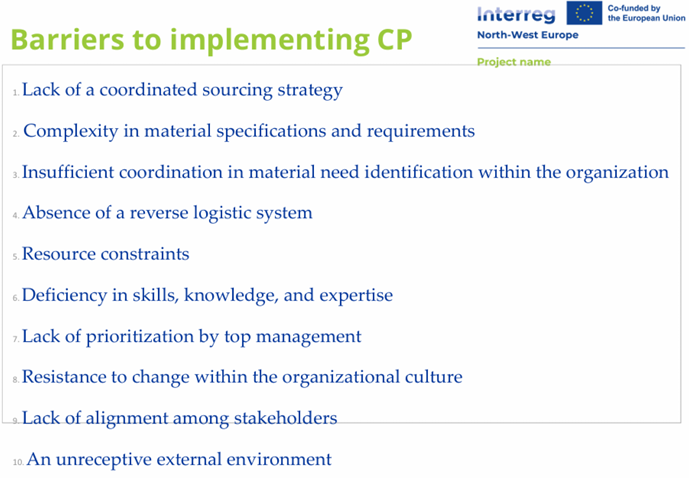
From her wealth of experience, Dr Cramer's main learnings about circular procurement are:
- Integrate SP and CP into organisations.
- Set requirements for each product group – each is different and begs different needs. Experts can help you navigate this.
- A tailor-made approach is required - every organisation has a different identified urgency. Some are motivated by GHG reduction, others want to illustrate their missions.
- Create internal support networks - involve people who are willing to collaborate; create leadership groups internally in your organisations
- Selection of contractual methods is key - a performance-based contract is preferred, providing opportunities to explore innovations together with the market.
- Legal aspects have to be considered - costs by the legal department can be higher during first steps, but then go down.
- The engagement of newcomers is favourable but often not chosen by tenders - newcomers cannot demonstrate a history of performance, creating a barrier of hesitation especially among public contracting authorities.
- Organisational mindset shifts: do the things you need to complete to reach your goals; not just the actions you committed to doing!